Nice one catskill- looks like a classic example of a flipped around uncut sheet when printing. Simply having the uncut sheet facing the wrong way when printing one of the sides immediately explains all 3 aspects of that triple threat- 1)different character because now different area of the sheet is coinciding with the front, 2) upside down because the sheet is flipped around, and 3)miscut because the margins of the sheet werent perfectly symmetrical thus when sheet is flipped around fronts/backs no longer aligned.
____________________ Marvel card collector 90s to present
March 29, 2026, 12:19 AM
wolverine651
I sent a few errors into CGC, here are some of the results (the grade doesnt really matter…I question for some of the miscuts whether they dock for the centering which doesn’t really make sense if they are grading it *as* an error).
The Galactus/Sandman 2-front error has to be one of my favorites in this batch. It’s amusing to think about labeling that card- is it a Galactus or Sandman card?
1994 Marvel Universe Hulk Powerblast- a lot going on with this error
1995 Marvel Metal gold blaster- missing the gold foil background
1993 Marvel Masterpieces - inverted and wrong foil name
____________________ Marvel card collector 90s to present
March 29, 2026, 08:23 AM
Bassam Abdul-Baki
quote:
Originally posted by wolverine651: I sent a few errors into CGC, here are some of the results (the grade doesnt really matter…I question for some of the miscuts whether they dock for the centering which doesn’t really make sense if they are grading it *as* an error).
The Galactus/Sandman 2-front error has to be one of my favorites in this batch. It’s amusing to think about labeling that card- is it a Galactus or Sandman card?
Did you give them the error information or do they have someone that knowledgeable?
March 29, 2026, 09:39 AM
Raven
quote:
Originally posted by Bassam Abdul-Baki: Did you give them the error information or do they have someone that knowledgeable?
Yeah, my guess would be that they don't have to have someone that knowledgeable to identify a wrong back or a blank back. Missing foil could be a little less obvious, but maybe not so much.
The grade is all about corners, and edges and centering. I'd say colors too, but that isn't necessarily the case as I have seen obviously faded cards grade well.
Just to play Devil's Advocate here why should CGC, or any other grader, place a higher grade on an error card that has been misprinted or came out of manufacturing incomplete? In truth, most of the known examples of error cards could simply be called damaged cards. Yes, people collect them as rarities if there are correct versions in greater numbers. Yes, people used to collect them when there was a chance of completing a set. But just acknowledging that these are badly made cards, why would you want to pay a premium to grade something that should have been thrown out when discovered?
At best, the average types of error cards are novelties that should never cost all that much to anybody.
I know, to each his own, but don't expect graders to reject anything as long as there's money in it for them.
March 29, 2026, 12:59 PM
wolverine651
quote:
Originally posted by Bassam Abdul-Baki: Did you give them the error information or do they have someone that knowledgeable?
There is a little box to check next to each card on the submission form whether it’s an error card or not- thats all the info content I provided, checking off that box. They add the error designations on the label on their own (in past submissions they also said “Error” right under the grade number but these didnt for some reason..but still have the designation at least). Past example:
They usually get the error designation right but not always in my experience. CGC seems to pride itself in its capacity to handle error cards, particularly in Pokémon TCG cards. Some grading companies like PSA won’t even grade fluke misprints (PSA only grades established, “known” errors that are in their database like 1990 Topps Frank NNOF or C-3PO x rated version etc. They won’t grade a one-off misprint similar to the above). CGC does though, which is why I send them to CGC.
Most of the designations are pretty easy- no foil, wrong back etc. The more complex ones I’m not sure if the supposed experts there really know whats going on fully- for example that Hulk power blast above is not simply missing foil, which they designated on the label. If anything it’s overfoiled as the card really shines heavily compared to a regular example, shown here. The error is slathered in foil.
But for the most part they seem to ID things correctly.
____________________ Marvel card collector 90s to present
March 29, 2026, 02:07 PM
wolverine651
quote:
Originally posted by Raven: Yeah, my guess would be that they don't have to have someone that knowledgeable to identify a wrong back or a blank back. Missing foil could be a little less obvious, but maybe not so much.
The grade is all about corners, and edges and centering. I'd say colors too, but that isn't necessarily the case as I have seen obviously faded cards grade well.
Just to play Devil's Advocate here why should CGC, or any other grader, place a higher grade on an error card that has been misprinted or came out of manufacturing incomplete? In truth, most of the known examples of error cards could simply be called damaged cards. Yes, people collect them as rarities if there are correct versions in greater numbers. Yes, people used to collect them when there was a chance of completing a set. But just acknowledging that these are badly made cards, why would you want to pay a premium to grade something that should have been thrown out when discovered?
At best, the average types of error cards are novelties that should never cost all that much to anybody.
I know, to each his own, but don't expect graders to reject anything as long as there's money in it for them.
Some great questions here. I’m just one person, but some of my opinions..
To start with, “How should an error be graded?” (and perhaps another…does it even *matter* what an error card grades as…like a sketch card, who is looking at the grade of an error).
My stance on how it should be graded….if it’s graded AS an error card, the nature of that error itself should not knock off from the grade- missing foil shouldnt take off points for surface condition, miscuts shouldnt deduct for centering etc. Why: because I view the error card as a fundamentally different unit than the regular version- a separate collectible if you will (as opposed to just the same thing but very damaged…rather it was a differently *made* thing from the factory itself…and in fact errors should be differentiated from damaged cards after the fact- a miscolored print job is different from a regular sun damaged card…the former is interesting, the latter is not. As long as this can differentiated, and you can know if it came from the factory or not). So what is all this saying: that Carnage holofoil above isnt damaged per se, it’s a made-wonky card. No one’s gonna start with a regular Carnage and have it get damaged to result in that.
What they should do is if they acknowledge the error, to then grade the card as-is without regard to the error itself, just as PSA does for Off-Center qualifiers (like a PSA 9 (OC)) or a qualified grade in comic books, same type of concept. Because it’s sort of like saying: yea we know the elephant in the room is the card has an error going on, but we still get useful information evaluating the condition of the card itself regardless of that. One problem with my stance though: some errors are obviously errors (missing foil etc), but at which point does just a very badly centered card become an error? It’s more of a continuous spectrum after all. It requires an arbitrary designation but one that I think is fair is whether any part of the next card on the sheet is showing on the card (or make it even more stringent to be called an error- at least 25% of next card has to be showing etc.).
Do grades on errors even matter…to me they don’t really that much (as long as the card isnt totally trashed and creased, paper loss etc) Almost like 1/1s or sketches, who cares what the exact condition is as much, the interest is in the nature of the error and condition is kinda superficial. I send a lot of these in just because I like the presentation, the official-ness of having a label designate the error for what thats worth, and especially for wrong backs because in a slab you can right away see whats going on. Even for just posting online that Sandman and Galactus bi-front, in the orientated slab can see exactly whats going on with it- 2 fronts with the front and backs inverted with respect to each other. Not that I plan on selling it, but you’ve seen listings of people trying show wrong backs- mirror pics, some even use videos on eBay listings to show it…actually quite a few eBay listings for wrong backs Ive had to message the seller saying that it couldn’t exist- it couldnt be a wrong back because the card on back doesnt match up with the geometry of the uncut sheet, and then promptly get a reply back “oops sorry! I didn’t realize it was just 2 stuck cards”.. But that confusion won’t happen for a wrong back slabbed like the above This message has been edited. Last edited by: wolverine651,
____________________ Marvel card collector 90s to present
March 29, 2026, 02:10 PM
wolverine651
RE: errors are novelties and people shouldnt be paying anything for them. That would take a whole long post to address and these are already running way too long (sorry!), so will try to be brief. Things are worth what people will pay for them. Ive sold some errors in the $250-400 range, Ive bought some for more than that (probably overpaid no question)….but those prices were paid and so those cards were actually worth that much at least in those scenarios. There is no objective way to say it’s wrong for someone to value a novelty like an error that much..they just do. A really, really wonky error kinda stands out- imagine like a totally miscut hologram or something- and someone may pay up for it. But it’s so niche and I agree MOST errors should be $20-50 cards tops just as curiosities (and I wish more eBay sellers would realize this and not price them into the thousands).
____________________ Marvel card collector 90s to present
March 29, 2026, 02:22 PM
catskilleagle
You're right about most errors. What's the big deal? I don't like miscuts, but if the miscut is so bad that you're getting about half of one card and half of another, that's very unusual and some collectors are going to want it because it is so weird. Like one of those strangely-shaped deepsea fishes, it's so ugly, it's beautiful.
A card with a reversed back is not that rare especially in certain sets but it's different so some collectors are going to pick one up if it;s cheap.
A card with a wrong back can be interesting if it involves two different popular characters or celebrities.
The desirable ones tend to be errors that still look good like a card missing foil. The card shows more of the original art so that's going to be very attractive to a lot of people.
A card with too much foil is quite rare so some collectors are going to want it.
A card with more than one type of error is very uncommon so that's interesting to some collectors too. That Marilyn Monroe card I showed cost me only $8. It was a good deal for a card with three different errors. If it had been $15-20, I would have had to think about it or maybe wait that one out while I picked up other stuff. If it had been $30 or more, that's a quick pass.
quote:
Originally posted by Raven:
quote:
Originally posted by Bassam Abdul-Baki: Did you give them the error information or do they have someone that knowledgeable?
Yeah, my guess would be that they don't have to have someone that knowledgeable to identify a wrong back or a blank back. Missing foil could be a little less obvious, but maybe not so much.
The grade is all about corners, and edges and centering. I'd say colors too, but that isn't necessarily the case as I have seen obviously faded cards grade well.
Just to play Devil's Advocate here why should CGC, or any other grader, place a higher grade on an error card that has been misprinted or came out of manufacturing incomplete? In truth, most of the known examples of error cards could simply be called damaged cards. Yes, people collect them as rarities if there are correct versions in greater numbers. Yes, people used to collect them when there was a chance of completing a set. But just acknowledging that these are badly made cards, why would you want to pay a premium to grade something that should have been thrown out when discovered?
At best, the average types of error cards are novelties that should never cost all that much to anybody.
I know, to each his own, but don't expect graders to reject anything as long as there's money in it for them.
March 29, 2026, 03:41 PM
Raven
Great discussion guys. In the case of error cards, even in the definition of what is an error card compared to a damaged card, there is enough room for all opinions. The same opinion can also change dependent on the individual card examined.
I totally concur that any card is worth what the average buyer will pay for it. There are some established error cards that are in that $250-$400 range. Most are nowhere near expensive and there are many card collectors who would barely know an error card if they came across one.
Remember that modern card manufacturing has pretty much done away with the creation of error cards because there are no second printings of correction cards. To be a true error, there must be a corrected version issued. So the error cards here are from older product, when backs could get switched or just not be put on, and some foils could go missed. Error cards come from a time of printing plates and poor-quality controls of massively overproduced runs. Sometimes the card manufacturers let a few things slip themselves to increase sales, although no one would ever admit to it.
Anyway it's terrific that experts get to air out their opinions for the benefit of people who have not had much experience in these areas. Error cards are much like promo cards in that they require specialization to get all the different perspectives.
Grading error cards is a subject that I never gave much consideration to because of my own reservations in declaring a card a desirable error or just a poorly made reject. I don't have that much confidence that the graders have figured it out either, but it won't stop them. Anyway, it's another niche issue that is fun to toss around and those photos are sweet.
March 29, 2026, 04:16 PM
Bassam Abdul-Baki
quote:
Originally posted by Raven:
quote:
Originally posted by Bassam Abdul-Baki: Did you give them the error information or do they have someone that knowledgeable?
Yeah, my guess would be that they don't have to have someone that knowledgeable to identify a wrong back or a blank back. Missing foil could be a little less obvious, but maybe not so much.
The fact that somebody took the time to compare it against a standard card is impressive enough. Then they gave a decent description of what the error was. Congrats!
March 29, 2026, 04:18 PM
Bassam Abdul-Baki
quote:
Originally posted by wolverine651:
quote:
Originally posted by Bassam Abdul-Baki: Did you give them the error information or do they have someone that knowledgeable?
There is a little box to check next to each card on the submission form whether it’s an error card or not- thats all the info content I provided, checking off that box. They add the error designations on the label on their own (in past submissions they also said “Error” right under the grade number but these didnt for some reason..but still have the designation at least).
Ahh! Thanks for that explanation.
March 29, 2026, 09:59 PM
wolverine651
quote:
Originally posted by catskilleagle: Like one of those strangely-shaped deepsea fishes, it's so ugly, it's beautiful.
Yea some truth to this. Actually as an error collector I won’t even feign that they are beautiful- I fully admit they aren’t …except perhaps in the one example you mentioned of a foil-less card not obstructing any of the art (like a “virgin variant” comic book cover). Most errors are downright ugly. Beautiful is not a term I use for errors, I’d rather use “interesting”, or maybe “eye catching”- terms I would also use for that deep-sea fish. “Interesting” because they are closely related to the printing process, and what can go wrong with that. They are often super rare, if not unique compared to the regular version- this is what can give an error some value. There is a gimmick novelty in there too- and the more egregious the error often the more interesting it is, sort of like in paper currency errors- but novelty only takes it so far. What really underlies an error’s value is a combination of factors together: the popularity of the set, rarity, character, whether an insert, and type of error, etc.
To use this Gambit example from above..which also happens to be a triple threat error so to speak: wrong character on back, miscut on back, and upside down back (just harder to tell since it’s a horizontal back- should be facing right). All the result of one simple thing during printing: a turned around uncut sheet that went under the press.
Wrong backs *overall* are not uncommon to see…there will be some on eBay at anytime from various sets. But if you isolate down to a particular set like this 1992 Marvel Masterpieces set- it can be exceedingly rare to find one, most of the time you won’t find any on eBay in this case. Nearly 800,000 of each regular 92 Masterpieces base card exist…probably only a handful, possibly even 1 of this wrong back version. (Compared to 800k is an utter needle in a haystack. When there are hundreds of thousands of the same thing and less than a handful of copies that are different, it is human nature to find the different thing interesting, no matter what the heck it even is, in this case a wrong back).
Who is the audience for such a card? 1) a general error collector who just likes novel errors, 2) a 1992 Marvel Masterpieces master set collector who wants to add anything and everything to a master set, or 3) A Gambit collector who wants every Gambit card out there. I’m probably a mixture of #1 and #2. But look at it from the perspective of a Gambit character collector. They certainly have the regular mass produced 92 Masterpieces Gambit card in their collection. They don’t have that above card, with almost certainty. And as mentioned above it’s really a sort of distinct card from the regular Gambit card- a different collectible unit from it with its own supply (a very low one). This starts to explain how such a card can actually have some value. Granted not all Gambit collectors WILL care about errors, or consider them distinct things to get…but some may because of the unique flair it can add to such a collection. It helps too that 1992 Marvel Masterpieces is a massively popular set and is generally put under the microscope for anything interesting/different going on in it. Here is a confirmed sale last year on eBay of a similar wrong back from last year, a Black Panther:
So itll largely come down to things like genre/set/character/type of error, etc for value. Whatever the case, picking up a neat error like you did for just $8…can’t go wrong. Even for the conversation piece-aspect alone.This message has been edited. Last edited by: wolverine651,
____________________ Marvel card collector 90s to present
March 29, 2026, 11:49 PM
wolverine651
quote:
Originally posted by Raven:
Remember that modern card manufacturing has pretty much done away with the creation of error cards because there are no second printings of correction cards. To be a true error, there must be a corrected version issued. So the error cards here are from older product, when backs could get switched or just not be put on, and some foils could go missed. Error cards come from a time of printing plates and poor-quality controls of massively overproduced runs. Sometimes the card manufacturers let a few things slip themselves to increase sales, although no one would ever admit to it.
It does seem like errors were more prevalent in the 90s- I collect Marvel and Fleer/Skybox was certainly not perfect within the whole print runs (partly because they were massive as you said..mistakes bound to happen). I do see errors in recent sets, but it seems less prevalent. A few 2016 Marvel Masterpieces parallels have been spotted saying the wrong parallel on back, some 2020 X-Men Metal Palladium inserts didnt get any foil treatment, and a very well known error (actually corrected error) in the recent 2024 Marvel Masterpieces ‘92 Platinum set where Adam Warlock and Apocalypse had interchanged backs (all these examples from Upper Deck). So it happens but not to the extent of the 90s probably.
The point you made about true error brings up an interesting topic: a glossary of error terms. Some may call these or organize these differently than I do, but here goes: (unfortunately the examples are all Marvel as thats most of my familiarity).
Uncorrected Error (UER): Never was changed during production and all examples of the card have the error. In your terminology above, you would call this not a true error. There is no added value premium for this error- same as a regular card.
Example: 1995 Fleer Ultra X-Men Spring Break Prof X/Jubilee (this misspelling of Jubilee was never corrected).
Corrected Error (CE): Mistake *in the card design itself* (prior to printing). It was caught after some already got printed then fixed with a corrected version.
Example: 1994 Fleer Ultra X-Men Iceman no # to #98.
Corrected error values are usually correlated with how fast the error got corrected during the run. The faster it got caught (the smaller number of errors out there), the higher the value generally. This Iceman no # error is not scarce- it’s probably slightly rarer than the regular #98 version but still pretty common to find, and goes for a couple bucks.
Variant: This is basically just a Corrected Error (CE), except that it’s not strictly speaking a mistake being corrected. It’s just a variant that exists. For example, in this 1995 Fleer Ultra X-Men Sauron card, there exists versions with backs facing either way (in roughly equal numbers). Clearly Fleer changed the design of this card at some point in the run, but it doesn’t make sense to refer to either as “the error” since neither is wrong.
As a fun thought experiment: imagine if instead of roughly equal numbers, the numbers were more like this: 100 facing left, and 650,000 facing right, in this print run. It goes without saying the facing left would acquire a decent amount of value for its scarcity regardless of how trivial and silly it is with Sauron merely facing a different way. That right there illustrates a fact about errors- it’s often not even really about what it looks like..but more just what it is, and its supply etc.
Misprint: A misprint is a mistake that happens to a card during the actual printing phase. These are things like: missing foil, miscuts, wrong backs, only-foils, misaligned foil, wrong foil layer etc. (in short, most of the examples I showed above in thread). I get lazy and just lop everything into the term “error”, but really these are better classified as misprints. They are often fluke one-off’s or at least have very little # of copies existing, compared to corrected errors which can have many out there (sizeable portion of the print run).
Example: 1993 Marvel Masterpieces Blade that is miscut with a wrong foil layer (resulting from the sheet being the wrong way when applying the foil, and then cut based on the foil, not the card). This message has been edited. Last edited by: wolverine651,
____________________ Marvel card collector 90s to present
March 30, 2026, 07:39 AM
JOHN LEVITT
Enough of these modern cards
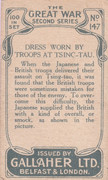
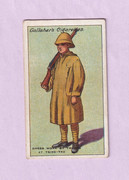
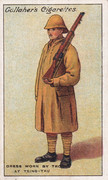
Herewith two cards from Gallaher's The Great War Series II issued in 1916 a well known error card that was corrected. I bought the whole set of 100 cards at an auction in the 1980's and then a while later I came across the corrected card at a card fair.
[IMG:left][/IMG]
[IMG:left][/IMG]
[IMG:left][/IMG]
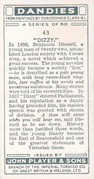
Herewith three cards where the original issue was corrected twice. The cards are from Player's Dandies set of 50 cards issued in 1932 whereby card 43 Disraeli was depicting him in 1826 standing on Westminster Bridge with the Houses of Parliament and Big Ben behind him. Following its issue it was realised the the artist had overlooked the fact that Big Ben was built in 1859. The image was then corrected to erase both Big Ben and the Houses of Parliament however the buildings were not erased thoroughly so another card was issued.
[IMG:left][/IMG]
[IMG:left][/IMG]
[IMG:left][/IMG]
[IMG:left][/IMG]
These cards were purchased several years ago.
regards
John
____________________
March 30, 2026, 09:33 AM
Raven
quote:
Originally posted by wolverine651: The point you made about true error brings up an interesting topic: a glossary of error terms. Some may call these or organize these differently than I do, but here goes: (unfortunately the examples are all Marvel as thats most of my familiarity).
Uncorrected Error (UER): Never was changed during production and all examples of the card have the error. In your terminology above, you would call this not a true error. There is no added value premium for this error- same as a regular card.
Corrected Error (CE): Mistake *in the card design itself* (prior to printing). It was caught after some already got printed then fixed with a corrected version.
Corrected error values are usually correlated with how fast the error got corrected during the run. The faster it got caught (the smaller number of errors out there), the higher the value generally. This Iceman no # error is not scarce- it’s probably slightly rarer than the regular #98 version but still pretty common to find, and goes for a couple bucks.
Variant: This is basically just a Corrected Error (CE), except that it’s not strictly speaking a mistake being corrected. It’s just a variant that exists. For example, in this 1995 Fleer Ultra X-Men Sauron card, there exists versions with backs facing either way (in roughly equal numbers). Clearly Fleer changed the design of this card at some point in the run, but it doesn’t make sense to refer to either as “the error” since neither is wrong.
Misprint: A misprint is a mistake that happens to a card during the actual printing phase. These are things like: missing foil, miscuts, wrong backs, only-foils, misaligned foil, wrong foil layer etc. (in short, most of the examples I showed above in thread). I get lazy and just lop everything into the term “error”, but really these are better classified as misprints. They are often fluke one-off’s or at least have very little # of copies existing, compared to corrected errors which can have many out there (sizeable portion of the print run).
Over the years there have been a couple of threads started on Card Talk to try to nail down hobby definitions. It's impossible. There is always debate, even on some of the most basic words/terms that you would think are universally accepted. With that in mind:
Uncorrected Error: You are correct, I don't see the point in that term. If all the cards are exactly the same because that's how they were designed, but there is a misspelling in text or the wrong photo, it is not an error card. So why not call it a mistake and not even mention error. A true error card must have a corrected version. If the error card is in less quantity than it may get a premium. Sometimes the later corrected error card will be the shorter print and then it gets the premium. I would rather the term uncorrected mistake be used to acknowledge whatever is wrong without impling any connection to a true error card.
Corrected Error: That's just the second part of the true error card. It's twofold, sometimes multifold. Remember that Billy Ripkin FF card. I still have one somewhere. They had about 3 versions of that one blacking out the FF bat in some manner. All could be called corrected errors, but might you also call them variants?
Variants: Now this is fun. You know how all thumbs are fingers, but not all fingers are thumbs? Well, I think all corrected errors are variants, but not all variants are correction cards. Variants are made different from the majority card. Maybe it's a color or a material. Many relic cards became variants. Variants may have nothing to do with an error card, but they can be lumped into corrections on certain cards. This is why there are arguments over the nature of certain variants.
Misprint: This one I don't use because it could mean anything and nothing. My go to term is damaged card, and I mean that as coming from the manufacturer, not damage in handling. To me a damaged card was made wrong or incomplete in the factory process. It went into the pack that way. You can break the damage down to specifics. Foil is missing, blank back, wrong back, off center, etc., but it was badly made in some way.
Now as you have skillfully articulated in your posts above, some of these cards that I would call damaged might actually garner a premium from some card collectors. They might even be worth sending in for grading. I wouldn't do that, but I can appreciate now where it might be appropriate for those collectors who focus on card rarities, however they may be defined by them.
Sorry for the length, hard to condense and still make sense.
March 30, 2026, 02:01 PM
Bill Mullins
quote:
Originally posted by JOHN LEVITT: Enough of these modern cards
Herewith two cards from Gallaher's The Great War Series II issued in 1916 a well known error card that was corrected.
1916? Get outta here with that recent BS. Try 1888.
March 30, 2026, 03:32 PM
Bassam Abdul-Baki
quote:
Originally posted by wolverine651: It does seem like errors were more prevalent in the 90s- I collect Marvel and Fleer/Skybox was certainly not perfect within the whole print runs (partly because they were massive as you said..mistakes bound to happen). I do see errors in recent sets, but it seems less prevalent. A few 2016 Marvel Masterpieces parallels have been spotted saying the wrong parallel on back, some 2020 X-Men Metal Palladium inserts didnt get any foil treatment, and a very well known error (actually corrected error) in the recent 2024 Marvel Masterpieces ‘92 Platinum set where Adam Warlock and Apocalypse had interchanged backs (all these examples from Upper Deck). So it happens but not to the extent of the 90s probably.
The point you made about true error brings up an interesting topic: a glossary of error terms. Some may call these or organize these differently than I do, but here goes: (unfortunately the examples are all Marvel as thats most of my familiarity).
Uncorrected Error (UER): Never was changed during production and all examples of the card have the error. In your terminology above, you would call this not a true error. There is no added value premium for this error- same as a regular card.
Corrected Error (CE): Mistake *in the card design itself* (prior to printing). It was caught after some already got printed then fixed with a corrected version.
Corrected error values are usually correlated with how fast the error got corrected during the run. The faster it got caught (the smaller number of errors out there), the higher the value generally. This Iceman no # error is not scarce- it’s probably slightly rarer than the regular #98 version but still pretty common to find, and goes for a couple bucks.
Variant: This is basically just a Corrected Error (CE), except that it’s not strictly speaking a mistake being corrected. It’s just a variant that exists. For example, in this 1995 Fleer Ultra X-Men Sauron card, there exists versions with backs facing either way (in roughly equal numbers). Clearly Fleer changed the design of this card at some point in the run, but it doesn’t make sense to refer to either as “the error” since neither is wrong.
Misprint: A misprint is a mistake that happens to a card during the actual printing phase. These are things like: missing foil, miscuts, wrong backs, only-foils, misaligned foil, wrong foil layer etc. (in short, most of the examples I showed above in thread). I get lazy and just lop everything into the term “error”, but really these are better classified as misprints. They are often fluke one-off’s or at least have very little # of copies existing, compared to corrected errors which can have many out there (sizeable portion of the print run).
I have a 2024 Fleer Ultra Matriarchs of Marvel MAT-23 sketch card (assigned to Ed Blias) drawn and signed by Bete Rodrigues (assigned MAT-9). That is my favorite UER because it appears to be a one-off since it's a sketch card.
March 30, 2026, 05:42 PM
JOHN LEVITT
quote:
Originally posted by Bill Mullins:
quote:
Originally posted by JOHN LEVITT: Enough of these modern cards
Herewith two cards from Gallaher's The Great War Series II issued in 1916 a well known error card that was corrected.
1916? Get outta here with that recent BS. Try 1888.
May I ask if you own the cards as I am showing cards that are in my possession and not images taken from the internet which any Tom, Dick or Harry can do .
When showing card images it is not polite to indicate where they come from i.e. issuer, set title.
My information of the two cards you have shown is from page 76 of reference book "North American Tobacco Issues" published in 2014 by the Cartophilic Society of GB.
The two error cards come from "Celebrated American Indian Chiefs" issued by Allen & Ginter in small size as opposed to their other issue which was a larger size and did not contain the error cards and had the additional title "The American Indian". An album was also produced which shows all the images.
The two cards pictured are only part of the error cards in this set and the backs depict a list of all the cards issued in alphabetical order as they are not numbered.
The four cards that were issued with wrong captions were:- Correct Caption Wrong Caption Agate Arrow Point Chief Gall Chief Gall British British White Swan White Swan Agate Arrow Point
These cards were also issued by BAT in 1930 with English text and Spanish text and other trade issuers.
Is that enough BS for you.
____________________
March 30, 2026, 06:15 PM
wolverine651
Those are some neat vintage errors! That Big Ben gradually fading from view is something. I have to give the card maker credit for caring that much about the historical accuracy of the scene.
quote:
Originally posted by Raven: Over the years there have been a couple of threads started on Card Talk to try to nail down hobby definitions. It's impossible. There is always debate, even on some of the most basic words/terms that you would think are universally accepted. With that in mind: )
Oh it’s definitely gonna be some semantics and definitional variety within the hobby for sure
I can tell you prefer the term error to be used only when the card is actually corrected. I think I use the UER term just going back to my old days I collected sport cards and Beckett using that designation for them etc.
Thats a great point CER’s can have more the one replaced version (It’s true this will generally be lumped into Variant for me, including the Billy Ripken FF). That card with Big Ben above is a great example of this.
I may not have been clear on the Variant thing. I totally agree the term variant in general has all kinds of meanings in the card hobby, including like you said different types of relics or even just parallels are sometimes called variants. Instead I’m just using that word in a very specific, technical sense here to create a new category: cards that had designed changed during production but not a change to “correct something thats wrong”. Because after all, it doesnt make sense to call either of those Sauron’s an error because there is nothing “wrong” with either way hes facing. Fleer making a different version is really just creating a variant in a way. Here would be another example I’d call a Variant from Marvel- Impel’s 1990 Marvel Universe Hologram MH5, comes in 2 variants. Neither of these is technically ‘wrong’ since the front hologram is horizontal and so neither back is really “upside down”.
(The top variant actually is quite a bit rarer but not totally scarce…it maybe goes for up to a few tens of dollars). I think in my definitions Variant and Corrected error have very similar meanings, I’m just separating them because of the nature of whats being corrected.
As for misprints, I can tell we are gonna be somewhat at odds on that because you consider it damage and I don’t…but that’s part of the fun of subjective definition Heck I get lazy a lot and just lump a lot of this- misprints, variants, corrected errors, etc just under a general umbrella “Error”. Sort of helps with eBay listing titles as well to just use the term Error, since most of the hobby just calls it that- like that Blade/Deadpool above with the inverted wrong foil, a huge chunk of the hobby would just call that an error I think.This message has been edited. Last edited by: wolverine651,
____________________ Marvel card collector 90s to present
March 30, 2026, 06:50 PM
catskilleagle
Thanks John and Bill for the older cards. Great stuff. This thread has really developed into a fun read with informative images.


 This message has been edited. Last edited by:
  Anyway, it's another niche issue that is fun to toss around and those photos are sweet.


 This message has been edited. Last edited by: